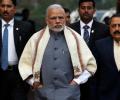
If the Modi government's approach to economic policy making is any indication, expectations of a sudden spurt in economic reforms after the assembly election results appear to be grossly misplaced.
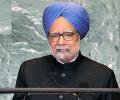
Manmohan Singh, the former prime minister of India and architect of the country's economic reforms, passed away on Thursday night at the age of 92. Born in a village in undivided Punjab, now in Pakistan, Singh's family witnessed first-hand the tragic Partition. Throughout his long public life, he often spoke of communal harmony and democratic values. He served two terms as prime minister from 2004 to 2014 and was known for his wisdom and quiet demeanor.

The fewer the number of central ministries that matter, the better the efficacy of India's reforms.

In its essence, GST is a national level system of value added taxation of goods and services, says Shankar Acharya.

Bibek Debroy was one of the very few economists not bound by any single area of expertise and was simultaneously curious about economics and politics, myths and maths, chess and chemistry, and what not, remembers Laveesh Bhandari.
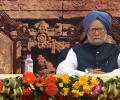
'He will be remembered more for what he did as finance minister -- as someone who functioned well when the political fallout was taken care of.'

President Droupadi Murmu, in her address to the nation on Republic Day, advocated for the "One Nation One Election" initiative, emphasizing its potential to enhance governance and reduce financial burdens. She highlighted the government's efforts to eliminate remnants of colonialism, citing the replacement of British-era criminal laws with modern alternatives. Murmu also lauded India's economic progress, stressing the importance of inclusive growth and social welfare. She urged citizens to remember the sacrifices of freedom fighters and reaffirmed the significance of the Constitution in guiding India's journey towards a prosperous and equitable future.

RBI's interest rate decision, quarterly earnings and global cues would be the major driving factors for equity markets this week, analysts said adding that the impact of the Union Budget could linger on this week. Trading activity of foreign investors will also be a key driver for the markets, experts noted. "US and India's manufacturing PMI for January to be released on Monday, will be the key macro data to watch out for.

'Expect India to keep doing well irrespective of geopolitics.'

Gourav Vallabh joined the Bharatiya Janata Party on Thursday hours after he quit the Congress, saying he can neither raise anti-Sanatan slogans nor abuse "wealth creators" day in and day out and was joining the ruling party due to his support for Prime Minister Narendra Modi's agenda of "Viksit Bharat".
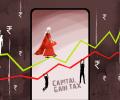
'Volumes in F&O trading had gone up rapidly and, in a way, the increase in STT on F&O will protect investor interest.'
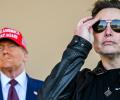
United States President-elect Donald Trump's plan to overhaul the government with a new department headed by tech billionaire Elon Musk and Indian-origin entrepreneur Vivek Ramaswamy will be a biggest threat for China as it has to compete with far more efficient US political system, a policy advisor to the Chinese government said.
'Suddenly we had a new comprehension of affairs, which reminded that the luxury of politics floated atop a foundation by economics.' 'Along with this, finance ministers became crucial in molding the perception and reputation of Union Cabinets.' 'Governments couldn't afford a wrong person in that portfolio,' asserts Shyam G Menon.
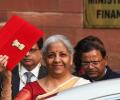
'... that it once again shies away from renewing its commitment to strategic divestment,' points out A K Bhattacharya.

India's primary deficit (Centre and states) for FY21 is assumed to be 6.8 per cent of GDP, according to the Economic Survey tabled in Parliament on Friday. It said the Covid-19 pandemic has created a significant negative shock to demand. Active fiscal policy -- one that recognises that fiscal multipliers are disproportionately higher during economic crises than during economic booms -- can ensure that the full benefit of seminal economic reforms is reaped by limiting potential damage to productive capacity.
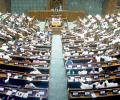
Parliament's approval of the Waqf (Amendment) Bill, a contentious piece of legislation aimed at reforming Waqf bodies, has sparked strong reactions from the opposition, who allege that the bill was "bulldozed" through Parliament. The bill, considered the government's most consequential legislation in its third term, was passed with comfortable majorities in both the Lok Sabha and Rajya Sabha despite opposition claims of a lack of consultation and an intrusion into religious affairs. Other notable bills approved during the session included the Finance Bill, Appropriation Bill, Immigration and Foreigners Bill, and Tribhuvan Sahkari University Bill. The session, which saw high productivity, also witnessed debates on issues such as economic distress, delimitation, and the three-language policy. While the government touted its achievements, the opposition criticized the government's approach and vowed to challenge the Waqf bill in court.

'Challenge is basically near-term growth as the outlook has turned a bit adverse.'

'If we truly wish to understand and apply Marx's insights today, we must reject the rigid dogmas that later 'Marxists' imposed in his name.'
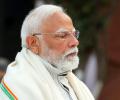
Prime Minister Narendra Modi said on Friday that there have been no attempts from abroad to stoke trouble in India ahead of the Parliament's Budget session, which begins on Saturday. Modi's statement comes as his government prepares to present its first full-fledged budget in its third term. He expressed confidence that the Budget session will infuse new confidence and energy in attaining the goal of 'Viksit Bharat' by 2047, and said his government has been working in a mission mode for an all-round development.

Several leading scientists, academicians, and agriculturalists have called for raising government support for research and development to make Indian agriculture future-ready.

Subramanian, a senior fellow at the Peterson Institute for International Economics in Washington, attended a news conference in New Delhi at which his appointment was announced.

Dalal Street minnows stole the show in 2024, giving handsome returns to investors, helped by a largely optimistic trend in the stock market and impressive retail investors' participation. Analysts attributed the positive trend in the equity markets, where the benchmark indices shattered many records this year, to robust domestic liquidity, strong fundamentals of the Indian economy, and policy continuity.

India's economic growth is expected to improve to 6.3 per cent in 2016 with the country leading economic recovery in South Asia, according to a United Nations report.

Principal economic advisor, Ila Patnaik, is coordinating the work on Economic Survey 2013-14.

Leterme contended that there is a need for the United Nations Security Council to adapt to the realities of the 21st century as it requires representation that goes beyond the structures established in the 20th century.
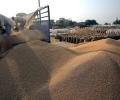
T Nanda Kumar, former food and agriculture secretary, shared his memories of working with former prime minister Manmohan Singh during some of India's most challenging times, highlighting Singh's compassionate leadership and commitment to ensuring food security for all Indians. Kumar recalled Singh's steadfast support during the 2008 global food crisis, where he championed a ban on non-basmati rice exports to secure domestic supplies. Singh's leadership, characterized by intellect and humility, left a lasting impression on Kumar, who considered him a mentor and guiding light.
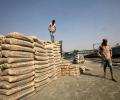
The 31st meeting of the Goods and Services Tax (GST) Council, held in December 2018, deferred a decision to reduce the GST rate for cement from 28 per cent to 18 per cent. This was despite recognising that cement - along with automobile parts - remained among the few mass-consumption items still taxed at the highest slab, which was originally meant for luxury and sin goods.

No government in the past initiated the process of policy making for its next tenure even before going in for elections. Once the Model Code of Conduct is enforced by the Election Commission, should the government of the day refrain from taking an active interest in policy making for the next five years and let that be the function of the new government?, asks A K Bhattacharya.
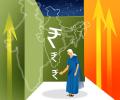
S&P Global Ratings on Wednesday upgraded India's sovereign rating outlook to positive from stable while retaining the rating at 'BBB-' on robust growth and improved quality of government expenditure. S&P said it could upgrade India's sovereign rating in the next 2 years if the country adopts a cautious fiscal and monetary policy that diminishes the government's elevated debt and interest burden while bolstering economic resilience.

It is time for Mr Modi to be a little more reasonable and rational.
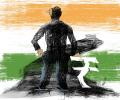
The employment situation remains dire. Whatever can be done to promote greater low-skill employment should be pursued aggressively, advises former chief economic adviser Shankar Acharya.
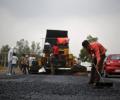
Monetary policy easing in India puts it out of step with the United States, the world's largest economy, where interest rates are expected to rise later this year
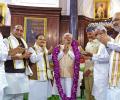
If the concerns over risking political capital are overcome, the long-term gains for the Indian economy will be immense, asserts A K Bhattacharya.

This is the lowest investment grade rating.
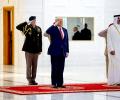
'He is intrigued by the intractability of Kashmir issue. With his interest in dealmaking and peacebrokering, he sees it as an exciting challenge to tackle.'

Given the many policy areas where the Centre and the states have not been seeing eye to eye in the last few years, it is time the Modi government convenes a meeting of the Inter-State Council, recommends A K Bhattacharya.

'We face the risk of remaining a low-income country for a very long time unless something changes in the next few years.' 'Instead of constantly talking about becoming a developed economy, we need to start fixing the problems of the economy one by one.' 'There is so much potential, and we are squandering away the opportunity.'

The issue of increasing inequality on the consequences of the economic policy trajectory has featured prominently in the public debate since the early 1990s. It came to a head during the general elections of 2004.

'If there is a push towards a Marxist oriented government it will be dangerous.' 'We have seen this in Nepal and Myanmar and it will be a concern for India if it is surrounded by countries with such political dispensations.'
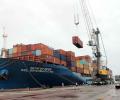
Industry associations and companies in the United States, including the US Chamber of Commerce, Coalition of Services Industries and the iconic bike company Harley Davidson have called on the Donald Trump dispensation to push India to reduce tariffs, non-tariffs, and regulatory barriers to boost American exports.
